

Arthroscopic Acromioplasty
Have Questions About Shoulder Treatments?
We're here to help you understand your options.
What is Acromioplasty?
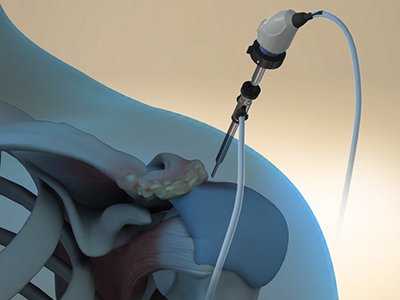
Acromioplasty is the surgical removal of a small part of the surface of the acromion (bony process on your shoulder blade). The shoulder joint is made up of a ball and socket joint, where the head of the humerus (upper arm bone) articulates with the socket of the scapula (shoulder blade), which is called the glenoid. The two articulating surfaces of the bones are covered with cartilage, which prevents friction between the moving bones, enabling smooth movement. Tendons and ligaments around the shoulder joint provide strength and stability to the joint.
Acromioplasty is a procedure to remove damaged cartilage, inflamed bursae, or excess bone which is causing pain and discomfort. This creates more space to enable smooth gliding of the joint without damaging its stability.
What is Arthroscopic Acromioplasty?
Arthroscopic acromioplasty is performed using an arthroscope, a small, fiber-optic instrument consisting of a lens, light source, and video camera. The camera projects images of the inside of the joint onto a large monitor, allowing your surgeon to look for any damage, assess the injury, and perform the repair.
What are the Indications for Arthroscopic Acromioplasty?
Arthroscopic acromioplasty is indicated for:
- Rotator cuff tears
- Shoulder impairment with severe pain
What is the Surgical Procedure for Arthroscopic Acromioplasty?
The surgery is performed under general anesthesia and regional anesthesia and involves the following steps:
- Arthroscopic portals are inserted through a small incision near the shoulder joint.
- Your surgeon performs diagnostic arthroscopy to confirm the extent of bone overgrowth or injury.
- Debridement, or cleaning out the bone tissue, is performed using a surgical shaver.
- Removal of damaged cartilage or bursae may be performed as needed.
- The incision is closed with a bandage upon completion.
What are the Complications of Arthroscopic Acromioplasty?
Complications are rare but can include:
- Frozen shoulder
- Small risk of infection
- Persistent pain
- Injury to nearby nerves or blood vessels
What Does Recovery After Arthroscopic Acromioplasty Involve?
Your rehabilitation protocol may include:
- A combination of non-steroidal anti-inflammatory drugs (NSAIDs) and opioids to manage pain.
- Your shoulder will be immobilized and you will be encouraged to rest it for a few weeks with no heavy lifting.
- Occupational therapy exercises will be taught to enhance your flexibility, range of motion and strength.
What are the Advantages of Arthroscopic Acromioplasty?
Advantages of arthroscopic acromioplasty compared to traditional open surgery includes:
- Smaller incisions
- Minimum bone removal
- Minimal pain
- Shorter recovery period
- Small surgery scars


