

Trigger Finger Release
Book Your Trigger Finger Treatment in New York Today
Schedule a consultation with Dr. Salil Gupta today to discuss the most effective treatment option for your condition.
Call now or request an appointment online to begin your recovery journey.
Trigger Finger Release Surgery in New York, Queens, Brooklyn, Manhattan & Long Island | Dr. Salil Gupta
Are you experiencing finger stiffness, clicking, or a locking sensation when you try to straighten your finger? Dr. Salil Gupta a board-certified orthopaedic surgeon, offers expert diagnosis and advanced trigger finger release treatment across New York, Queens, Brooklyn, Manhattan, and Long Island.
Trigger finger, also known as stenosing tenosynovitis, can interfere with simple daily tasks such as gripping, writing, or holding objects. When non-surgical treatments fail to provide relief, minimally invasive and surgical trigger finger release procedures can restore smooth finger movement and eliminate pain.
Dr. Gupta provides personalized treatment plans, including both percutaneous and open trigger finger release techniques, to help you regain full hand function quickly and safely.
What is Trigger Finger Release?
Trigger finger release is a surgical procedure employed in the treatment of a condition called trigger finger.
Trigger Finger, also known as stenosing tenosynovitis or flexor tendonitis, is a condition where one of the fingers or thumb of the hand is caught in a bent position. The affected digit may straighten with a quick snap, similar to pulling and releasing the trigger on a gun, hence the name trigger finger.
Trigger finger is caused by inflammation of the tenosynovium. The tenosynovium is the substance that lines the protective sheath around the tendon in the finger. This substance enables the tendon to glide smoothly within the sheath when the finger is bent or straightened. When inflammation is present, the tendon is unable to glide smoothly within its sheath causing “catching” of the finger in a bent position and then suddenly releasing the finger straight.
The 2 types of surgical interventions commonly employed for trigger finger are open trigger finger release surgery and percutaneous trigger finger release surgery. Your surgeon will choose the best option for you based on your condition and his preference.
Indications for Trigger Finger Release
Trigger finger release is recommended when conservative treatment options such as immobilization, medications, or steroid injections have failed to treat or resolve the symptoms of trigger finger such as:
- Stiffness in the finger, especially in the morning
- Finger movement creates a “popping” or “clicking” sound or sensation
- Soreness or a bump (nodule) at the base of the finger or thumb
- A locked finger with the inability to straighten
- Pain at the base of the finger or thumb when pressed on or moved
Preparation for Trigger Finger Release
In general, preparation for trigger finger release surgery may involve the following steps:
- A review of your medical history and a physical examination is performed to check for any medical issues that need to be addressed prior to surgery.
- Depending on your medical history, social history, and age, you may need to undergo tests such as blood work and imaging to help detect any abnormalities that could compromise the safety of the procedure.
- You will be asked if you have allergies to medications, anesthesia, or latex.
- You should inform your doctor of any medications or supplements that you are taking or any medical conditions you have such as lung or heart disease.
- You may be asked to stop taking certain medications, such as blood thinners, anti-inflammatories, aspirin, or other supplements for a week or two.
- You should refrain from alcohol and tobacco at least a few days prior to surgery and several weeks after, as it can hinder the healing process.
- You should not consume any solids or liquids at least 8 hours prior to the surgery.
- You should arrange for someone to drive you home after the surgery.
- A signed informed consent form will be obtained from you after the pros and cons of the surgery have been explained.
Procedure Involved in Trigger Finger Release Surgery
Your surgeon may perform either an open trigger finger release surgery or a percutaneous trigger finger release surgery as a surgical treatment for the trigger finger when conservative measures fail to provide satisfactory results.
Percutaneous trigger finger release surgery: “Percutaneous” means through the skin, and this is a minimally invasive in-office procedure that utilizes a needle to treat the affected tendon sheath tissue. The procedure is performed under local anesthesia. Your doctor utilizes ultrasound imaging to safely direct the needle to the affected tendon sheath and avert any injury to the nearby nerves or tendons. Most doctors will utilize a 16- or 18-gauge needle about the size of needles utilized for blood donation. The needle is utilized to disperse or disintegrate compressing tissue around the tendon sheath. As no incision is made, no sutures are required after the procedure.
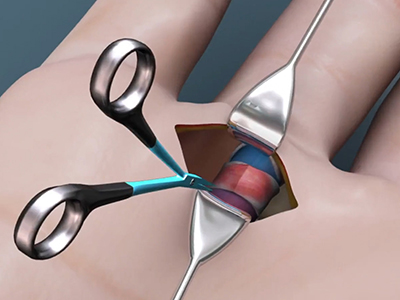
Open trigger finger release surgery: An alternative to percutaneous trigger finger release is an open trigger finger release surgery, which requires a small incision. The surgery is done as an outpatient procedure and takes about half an hour. It can take longer if more than one finger is being released. During the surgery, your surgeon administers local anesthesia, and once it takes effect, makes a small surgical cut in the palm of the hand. For the trigger thumb, the surgical cut is in the pad of the thumb. The surgeon then finds the tendon sheath and cautiously cuts through it to make more room for the tendon. Before completing the procedure and closing the wound, the surgeon may flex and extend the affected finger to make sure the tendon can move freely. Once the anesthesia wears off, the finger should be able to move normally right away.
Postoperative Care
After surgery, your surgeon will give you guidelines to follow. Common post-operative guidelines include:
- If you have had percutaneous surgery rather than open surgery for trigger finger release, your recovery period will be shorter as you will not have a wound on your palm.
- For open surgery, you may remove the dressings after a couple of days to make the finger movement easier. Full movement should return within 2 weeks.
- Keep the surgical incision clean and dry. Cover the area with plastic wrap when bathing or showering.
- You may experience pain, inflammation, and discomfort in the operated area. Pain and anti-inflammatory medications are provided as needed to address these.
- Application of cold compresses to the surgical area is also recommended to reduce inflammation and pain.
- You may start driving again as soon as you feel it is safe for you to drive, which is normally after 3 to 5 days. You should be able to write and use a computer immediately.
- You should be able to play sports after around 2 or 3 weeks once your wound has completely healed and you can grip again.
- Return to the job will depend upon the nature of the job one does. If you have a desk job or a job that involves light manual duties, you may not require any time off work. If your job involves manual labor, you may require about 4 weeks off.
Risks and Complications
As with any surgery, there are potential risks and complications involved. These include:
- Infection
- Pain or stiffness in the finger
- Inability to straighten the involved finger
- Scarring
- Nerve damage
- Incomplete trigger finger release
- Temporary swelling or soreness
Why Choose Dr. Salil Gupta for Trigger Finger Release in New York?
When it comes to treating trigger finger, expertise and precision matter. Dr. Salil Gupta is dedicated to providing effective, patient-centered care with excellent outcomes.
- Board-Certified Orthopaedic Surgeon with specialized experience in hand conditions
- Advanced Treatment Options including minimally invasive percutaneous release
- Personalized Surgical Approach based on severity and patient lifestyle
- Outpatient Procedures for faster recovery and convenience
- Comprehensive Care from diagnosis through rehabilitation
- Accessible Locations across New York, Queens, Brooklyn, Manhattan, and Long Island
Dr. Gupta focuses on relieving pain, restoring finger movement, and helping patients return to normal activities as quickly as possible.
Trigger Finger Release FAQs
It is a procedure that releases the tight tendon sheath, allowing the tendon to move freely and eliminating the locking or catching sensation.
The procedure is typically performed under local anesthesia, so pain during surgery is minimal. Mild discomfort after surgery is manageable with medication.
Most patients regain finger movement within a few weeks. Full recovery depends on the type of procedure performed.
Percutaneous release is minimally invasive with no incision, while open surgery involves a small incision for direct visualization.
Surgery is recommended when symptoms persist despite splints, medications, or steroid injections.
Book Your Trigger Finger Treatment in New York Today
Don’t let trigger finger limit your daily activities. Early treatment can prevent worsening symptoms and restore normal hand function.
Schedule a consultation with Dr. Salil Gupta today to discuss the most effective treatment option for your condition.
- Serving New York, Queens, Brooklyn, Manhattan & Long Island
- Call now or request an appointment online to start your recovery journey.


