

Gamekeeper's Thumb
Have Questions About Hand & Wrist Treatments?
We're here to help you understand your options.
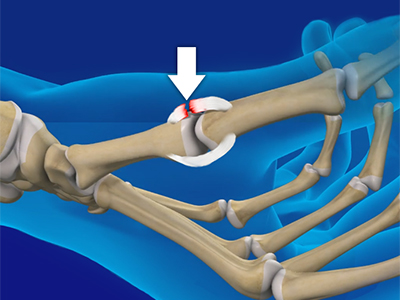
Gamekeeper’s thumb, also known as ulnar collateral ligament (UCL) injury of the thumb, is a condition that occurs when the ligament on the inside of the thumb’s base joint is stretched, partially torn, or completely torn. This ligament is essential for thumb stability and plays a key role in pinching, gripping, and grasping objects. Injuries typically occur due to a sudden force that bends the thumb backward or away from the hand, often seen in sports injuries, falls, skiing accidents, or direct trauma. Dr. Salil Gupta is a board-certified orthopaedic surgeon specializing in hand and upper extremity care, providing expert diagnosis and treatment for Gamekeeper’s thumb.
What is Gamekeeper’s Thumb?
Gamekeeper's thumb, also known as skier's thumb, is a tear of the ulnar collateral ligament, a band of tissue that supports the joint at the base of the thumb.
Causes of Gamekeeper’s Thumb
Damage to the ulnar collateral ligament may lead to chronic instability of the thumb, creating problems in its normal functioning. Gamekeeper's thumb can result from sports activities (while stopping a ball with a bare hand) or a fall on your outstretched thumb (especially while holding onto something like a ski pole).
Symptoms of Gamekeeper’s Thumb
The symptoms of gamekeeper’s thumb include pain, bruising and swelling at the base of the thumb. You may also experience loss of strength when pinching or gripping with the thumb.
Diagnosis of Gamekeeper’s Thumb
To diagnose gamekeeper’s thumb, your doctor may numb your thumb and perform a physical examination. If the tear is associated with a fracture of a bone, your doctor may order an X-ray or ultrasound.
Treatment for Gamekeeper’s Thumb
Your doctor may suggest applying ice to reduce swelling and prescribe pain-relieving medications. For a partially torn ligament, your doctor may order a splint or cast for about six weeks, followed by an exercise program to improve the thumb’s range of motion. If the ligament is completely torn, surgery is usually recommended for repair.


