

Arthritis Surgery for Thumb and Digit
Have Questions About Hand & Wrist Treatments?
We're here to help you understand your options.
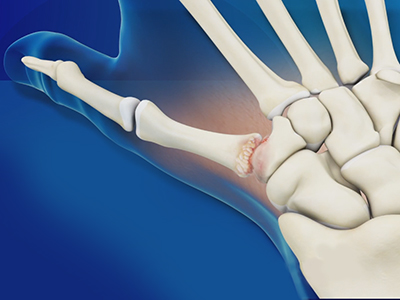
Arthritis surgery for the thumb and digits is done when joint damage from inflammation or wear-and-tear causes pain, stiffness, swelling, and reduced hand function. Most often caused by osteoarthritis, it can interfere with daily activities. If non-surgical treatments do not help, surgery may be recommended to relieve pain, improve stability, and restore function. Dr. Salil Gupta is a board-certified orthopaedic surgeon specializing in upper extremity care and advanced treatment for thumb and digit arthritis.
What is arthritis of the thumb and digits?
Arthritis is an inflammatory condition of the joints. The most common type affecting the thumb is osteoarthritis, also known as wear-and-tear arthritis, which typically affects the joint at the base of the thumb and may also involve the fingers. Thumb arthritis is more common in women than men and usually occurs after the age of 40.
What are the symptoms of thumb and finger arthritis?
Common symptoms include swelling, pain, stiffness, deformity, and difficulty using the hand for daily activities.
How is thumb arthritis diagnosed?
Diagnosis is usually made through a physical examination of the thumb. X-rays may be taken to assess the severity of the condition and identify bone spurs or calcium deposits.
What are the non-surgical treatment options?
Non-surgical treatments include activity modification, pain medications, splints, and steroid injections to help relieve pain and improve function.
When is surgery recommended?
Surgery is considered when non-surgical treatments fail to provide adequate relief and the condition significantly affects hand function. There are different surgical procedures that can be used and may include:
- Synovectomy: Removal of the inflamed joint lining (synovium), often performed in early inflammatory arthritis using arthroscopy.
- Arthroplasty: Joint replacement with an artificial implant. Ceramic implants are used for stronger bones with moderate demand, while silicone implants are used for weaker bones or severe joint damage.
- Arthrodesis (Fusion): Removal of the joint followed by fusion of the bones using wires or screws, eliminating motion but providing stability.
It is usually indicated in cases of severe joint damage, limited mobility, ligament and tendon damage, failed previous joint replacement, or when heavy manual use of the hand is expected.
How do you decide which surgery is right for you?
Your surgeon will evaluate your condition and discuss the most suitable surgical option based on your needs, lifestyle, and severity of arthritis.
What does rehabilitation involve after surgery?
Rehabilitation often includes occupational therapy to restore strength and movement. A post-operative splint may be used to protect the hand during healing.
You may need to restrict activities for at least 12 weeks to allow proper healing. Although recovery can be gradual, most patients can return to normal activities within a few months.


