

Tennis Elbow Treatment
Schedule Tennis Elbow Treatment in New York Today
Book a consultation with Dr. Salil Gupta today for advanced tennis elbow treatment in New York, Queens, Brooklyn, Manhattan, and Long Island.
Call now or request an appointment online to begin your recovery journey.
Regain your strength, relieve pain, and get back to doing what you love.
Tennis Elbow Treatment in New York, Queens, Brooklyn, Manhattan & Long Island | Dr. Salil Gupta
Struggling with elbow pain that worsens with gripping, lifting, or repetitive arm movements? Dr. Salil Gupta a board-certified orthopaedic surgeon, provides expert tennis elbow treatment in New York, Queens, Brooklyn, Manhattan, and Long Island to relieve pain and restore strength.
Tennis elbow, or lateral epicondylitis, is a common overuse injury caused by repetitive strain on the tendons of the forearm. It can affect not only athletes but also individuals involved in daily activities such as typing, lifting, gardening, or manual work.
Dr. Gupta offers comprehensive care, including advanced non-surgical therapies and minimally invasive surgical options when needed. His goal is to reduce pain, improve grip strength, and help you return to your normal activities quickly and safely.
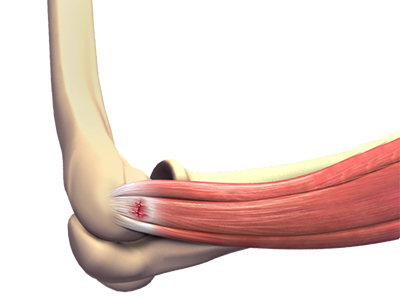
What is Elbow Anatomy?
The elbow is a joint made up of three bones: the upper arm bone, the humerus, and the two forearm bones, the radius and ulna. The lower end of the humerus has bony bumps called epicondyles that serve as sites of attachment for major tendons and muscles that help in arm movement. The bump on the outside of the elbow is called the lateral epicondyle. It helps in the attachment of the tendons and muscles that help extend your fingers and wrist.
What is Tennis Elbow?
Tennis elbow is a common name for the elbow condition lateral epicondylitis. It is an overuse injury that causes inflammation and microtears of the tendons that attach to the lateral epicondyle.
Tennis elbow is a painful condition occurring from repeated muscle contractions at the forearm. The condition is more common in sports activities such as tennis, painting, hammering, typing, gardening and playing musical instruments.
Tennis elbow and golfer’s elbow are similar, except that golfer’s elbow occurs on the inside of the elbow and tennis elbow occurs on the outside of the elbow. Both conditions are a type of tendonitis - inflammation of the tendons.
What are the Signs and Symptoms of Tennis Elbow?
The signs and symptoms of tennis elbow can include the following:
- Elbow pain that gradually worsens
- Pain to the outside of the elbow that radiates to the forearm and wrist with grasping objects
- Weak grip
- Painful grip
- Pain that is exacerbated in the elbow when the wrist is bent back
What Causes Tennis Elbow?
Tennis elbow is usually caused by overuse of the forearm muscles but may also be caused by direct trauma such as with a fall, car accident or work injury.
Tennis elbow is commonly seen in tennis players, hence the name, especially when poor technique is used while hitting the ball with a backhand stroke. Other common causes include any activity that requires repetitive motion of the forearm such as painting, hammering, typing, raking, weaving, gardening, lifting heavy objects and playing musical instruments.
How is Tennis Elbow Diagnosed?
Your doctor will evaluate tennis elbow by reviewing your medical history, performing a thorough physical examination and ordering X-rays, MRI or electromyogram (EMG) to detect any nerve compression.
What is the Treatment for Tennis Elbow?
Conservative Treatments for Tennis Elbow
Your physician will recommend conservative treatment options to treat the tennis elbow symptoms. These may include:
- Limit use and rest the arm from activities that worsen symptoms.
- Splints or braces may be ordered to decrease stress on the injured tissues.
- Place ice packs on the elbow to reduce swelling.
- Avoid activities that tend to bring on the symptoms and increase stress on the tendons.
- Anti-inflammatory medications and/or steroid injections may be prescribed to treat pain and swelling.
- Occupational therapy may be ordered for strengthening and stretching exercises to the forearm once your symptoms have decreased.
- Pulsed ultrasound may be applied to increase blood flow and healing to the injured tendons.
Lateral Epicondyle Release Surgery
If conservative treatment options fail to resolve the condition and symptoms persist for 6 - 12 months, your surgeon may recommend a surgical procedure to treat tennis elbow called lateral epicondyle release surgery. Surgery is considered a last resort and only 1 in 10 patients requires surgical intervention. The surgical success rate for relieving tennis elbow pain is 85-95%. The goal of tennis elbow surgery is to remove the diseased tissue around the outer elbow, improve blood supply to the area, and alleviate your symptoms. Your surgeon will decide whether to perform your surgery in the traditional manner or endoscopically. Traditional surgery involves up to a 2” incision in the elbow area.
The endoscopic surgery involves one or two ½” incisions to the outer elbow area, the lateral epicondyle and the use of an endoscope with a camera for viewing internal structures. Each incision is called a portal. A blunt tube, called a trocar, is inserted into each portal prior to the insertion of the endoscope and surgical instruments.
The television camera attached to the endoscope displays the image of the joint on a television screen, allowing your surgeon to view the elbow joint. The large image on the television screen allows the surgeon to see the joint directly and to determine the extent of the problem.
The second portal is used for the insertion of surgical instruments. This portal will be used to move aside soft tissue in order to view the extensor tendon and its attachment on the lateral epicondyle. Your surgeon then trims the tendon or releases the tendon and then reattaches it to the bone. Any scar tissue present will be removed as well as any bone spurs. After the surgery is completed, the portals (incisions) are closed with sutures or tape.
This surgery is usually performed in an operating room under regional or general anesthesia on an outpatient basis as day surgery.
Endoscopic surgery is much less traumatic to the muscles, ligaments, and tissues than the traditional method of surgically opening the elbow area with long incisions. These incisions result in very small scars, which in many cases are unnoticeable.
What are the Risks and Complications of Tennis Elbow Surgery?
As with any major surgery, tennis elbow surgery may involve certain complications such as:
- Allergic reactions to medications
- Blood loss
- Heart attack, stroke, kidney failure, pneumonia or bladder infection
- Infection
- Nerve damage
- Radial nerve damage, causing numbness, tingling, burning or loss of feeling in the back of the hand and forearm
- Wrist weakness with extension
- Recurrence or failure of relief from symptoms
Why Choose Dr. Salil Gupta for Tennis Elbow Treatment in New York?
Choosing an experienced orthopaedic specialist is crucial for effective and lasting relief from tennis elbow.
- Board-Certified Orthopaedic Surgeon with expertise in elbow and tendon conditions
- Specialized in Non-Surgical & Minimally Invasive Treatments
- Advanced Diagnostic & Treatment Techniques
- Personalized Care Plans tailored to your lifestyle and activity level
- High Success Rate in Pain Relief & Functional Recovery
- Multiple Convenient Locations in New York, Queens, Brooklyn, Manhattan, and Long Island
Dr. Gupta focuses on treating the root cause of your pain while helping you regain strength and mobility.
Tennis Elbow FAQs
Tennis elbow is an overuse injury that causes inflammation and small tears in the tendons on the outside of the elbow.
Anyone performing repetitive arm or wrist movements, including athletes, office workers, and manual laborers, can develop this condition.
Yes, most cases improve with rest, occupational therapy, medications, and other non-surgical treatments.
Surgery is considered only if symptoms persist for 6–12 months despite conservative treatment.
Recovery varies, but many patients improve within weeks to months. Surgical recovery may take several months.
Using proper technique, avoiding repetitive strain, and strengthening forearm muscles can help prevent recurrence.
Schedule Tennis Elbow Treatment in New York Today
Don’t let elbow pain interfere with your work, sports, or daily activities. Early diagnosis and expert care can help you recover faster and prevent long-term complications.
Book a consultation with Dr. Salil Gupta today for advanced tennis elbow treatment in New York, Queens, Brooklyn, Manhattan, and Long Island.
- Call now or request an appointment online
- Serving patients across New York City and Long Island
Regain your strength, relieve pain, and get back to doing what you love.


